From EEOC Charge to Position Statement, Drafted from the Record

An EEOC charge lands in your inbox. The client needs a position statement, the deadline is close, and the facts are spread across emails, handbook policies, performance reviews, and termination paperwork. The hard part is not the writing. It is getting every statement right, applying the right law, and being able to show where each piece came from.
That is the work Paxton is built for. Not a draft that sounds right, but a draft built from your matter and the law, with every line traceable.
Why position statements are harder than they look
A position statement is often the employer's first formal account of what happened, and it rarely stays in one place. It can be shared with the charging party, and if the charge turns into a lawsuit, it follows the matter into litigation. Every fact you state becomes something opposing counsel can test against the record.
That raises the stakes on two things at once. The facts have to match the documents exactly: dates, warnings, who said what, and when. And the legal framing has to fit the claim and the jurisdiction, because the standard that applies is not always the one you would reach for first. A strong position statement gets both right. A weak one creates the inconsistencies the other side will use later.
It starts where the charge arrives
The charge comes in by email. From Outlook, bring it into Paxton and into the matter, alongside everything else the client has sent. No downloading, renaming, and re-uploading. If the matter is already connected to your DMS, new documents the client sends are picked up as they arrive, so the record stays current without anyone managing files by hand.
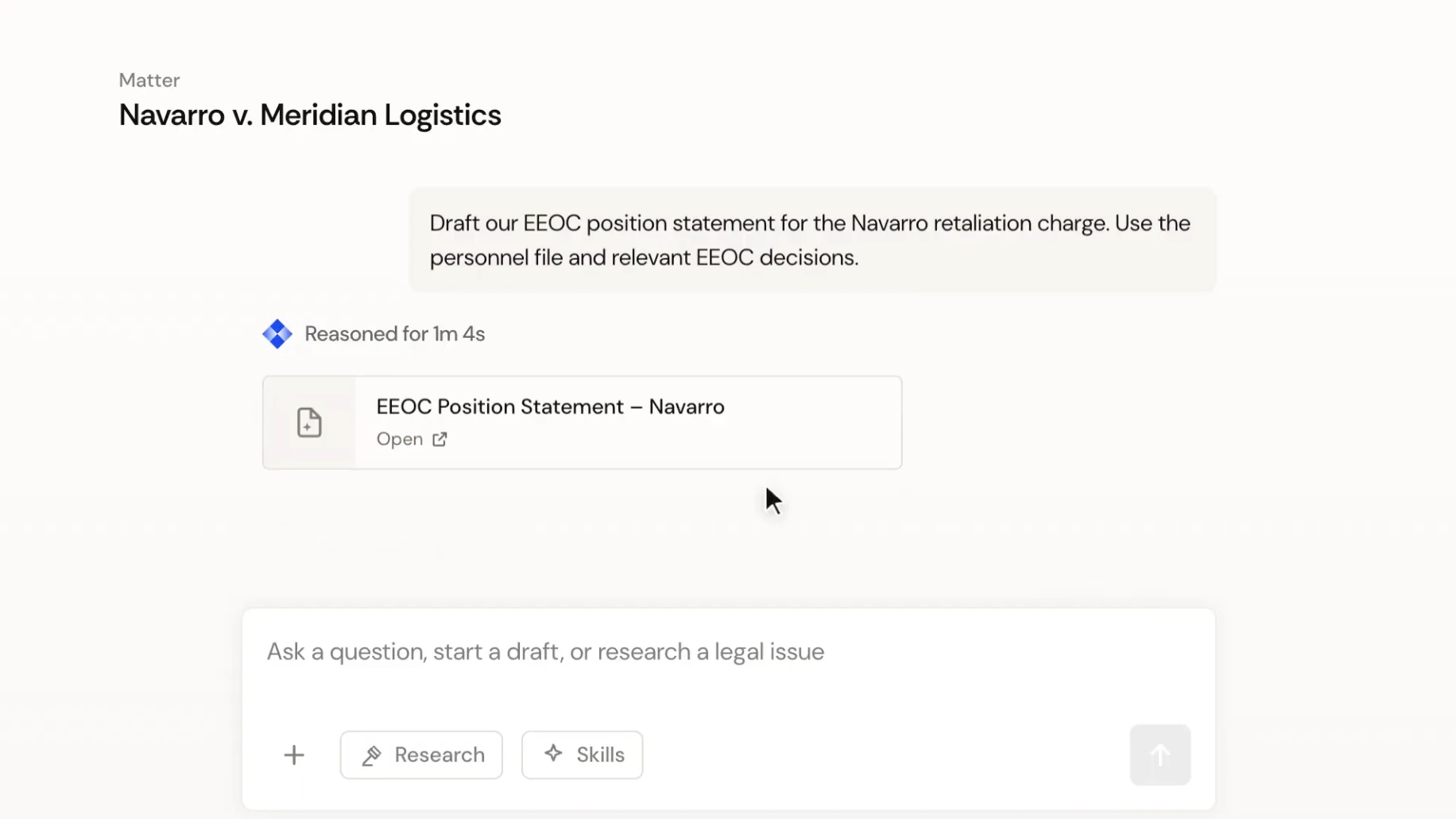
Master every fact in the record
Paxton works from the full matter: the charge, the emails, the handbook, the performance reviews, the termination documents. It reads every page, including scans, and builds a timeline with each fact linked to the page it came from.
That is where position statements are won or lost. Paxton surfaces the details a rushed review misses:
- Contradictions. A termination letter that cites one reason while the performance reviews document another, or dates that don't line up across emails.
- Gaps. A warning referenced in one email that never appears in the personnel file.
- Sequence. Exactly when a complaint was raised relative to the adverse action, which matters for any retaliation claim.
If two documents tell the story differently, you see it before the agency does.
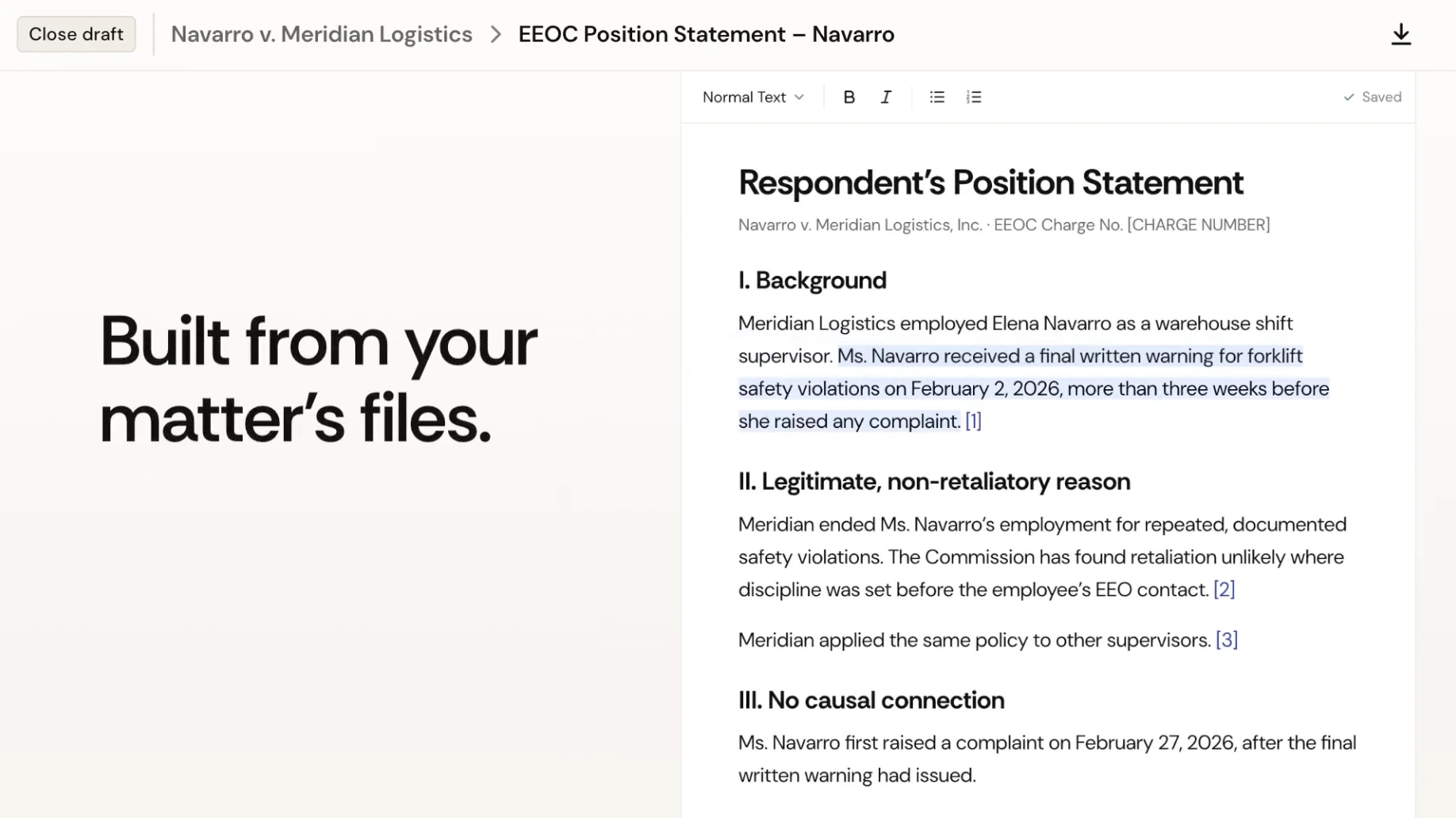
Find the law others miss
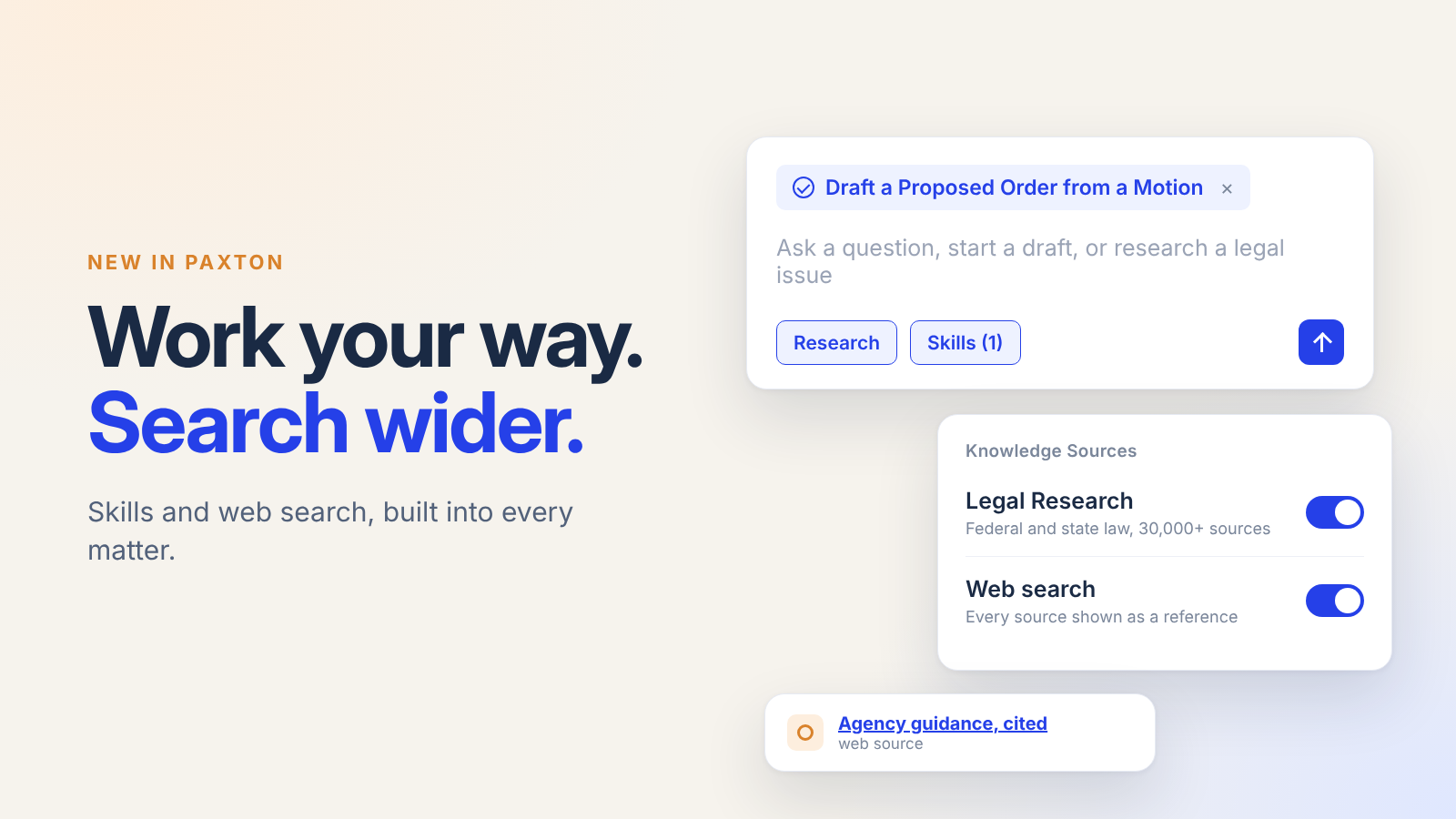
Employment claims rarely turn on federal law alone. The standard that decides a charge can sit in places most research tools don't reach. Paxton covers federal and state law plus more than 30,000 hard to find sources, so the research reflects where your client actually operates:
- EEOC decisions that show how the agency has treated similar claims.
- NLRB decisions, which matter whenever a charge touches handbook policies, workplace communications, or employees acting together.
- County and municipal codes, where local ordinances can add protected categories or obligations beyond state and federal law.
- Local court rules and judge standing orders, for when the charge becomes a lawsuit.
This is the material litigators usually hunt for across government websites, if they find it at all. In Paxton it sits in the same search as the case law, and every authority runs through the AI Citator before it reaches your draft, with the cited passage highlighted so you can confirm it says what you need it to say.
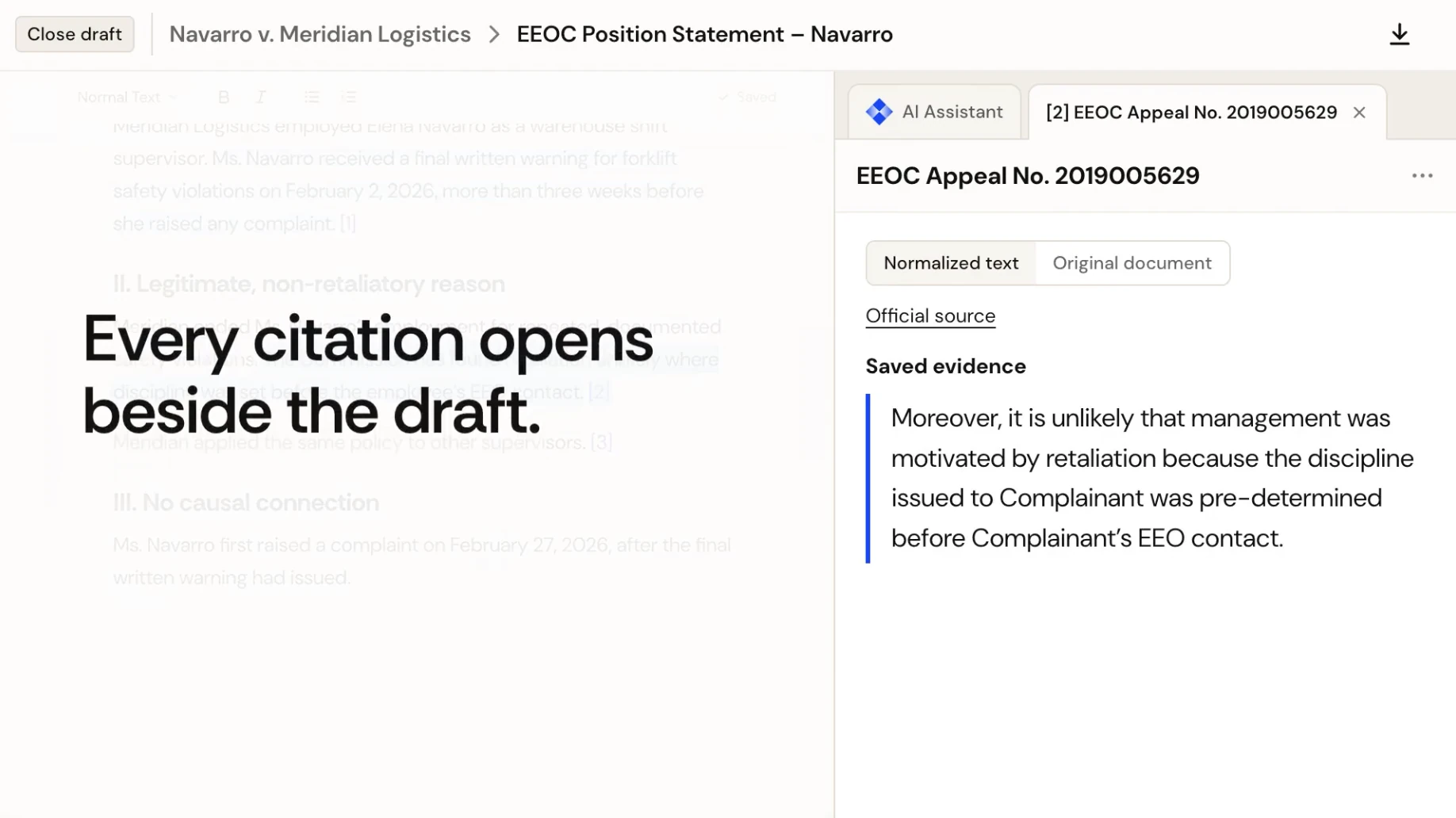
Research that already knows your facts
Generic research gives you a list of cases you still have to apply. Because Paxton's research runs inside the matter, it starts from the facts it has already found: the timeline, the policies, the documented warnings. The result is not a stack of authority to sort through. It is the law applied to your client's situation, ready to support the argument.
A draft that marries the facts and the law
Paxton drafts the position statement in your firm's template, from the record and the research together. Nothing gets pasted in from another tool, and nothing gets lost along the way.
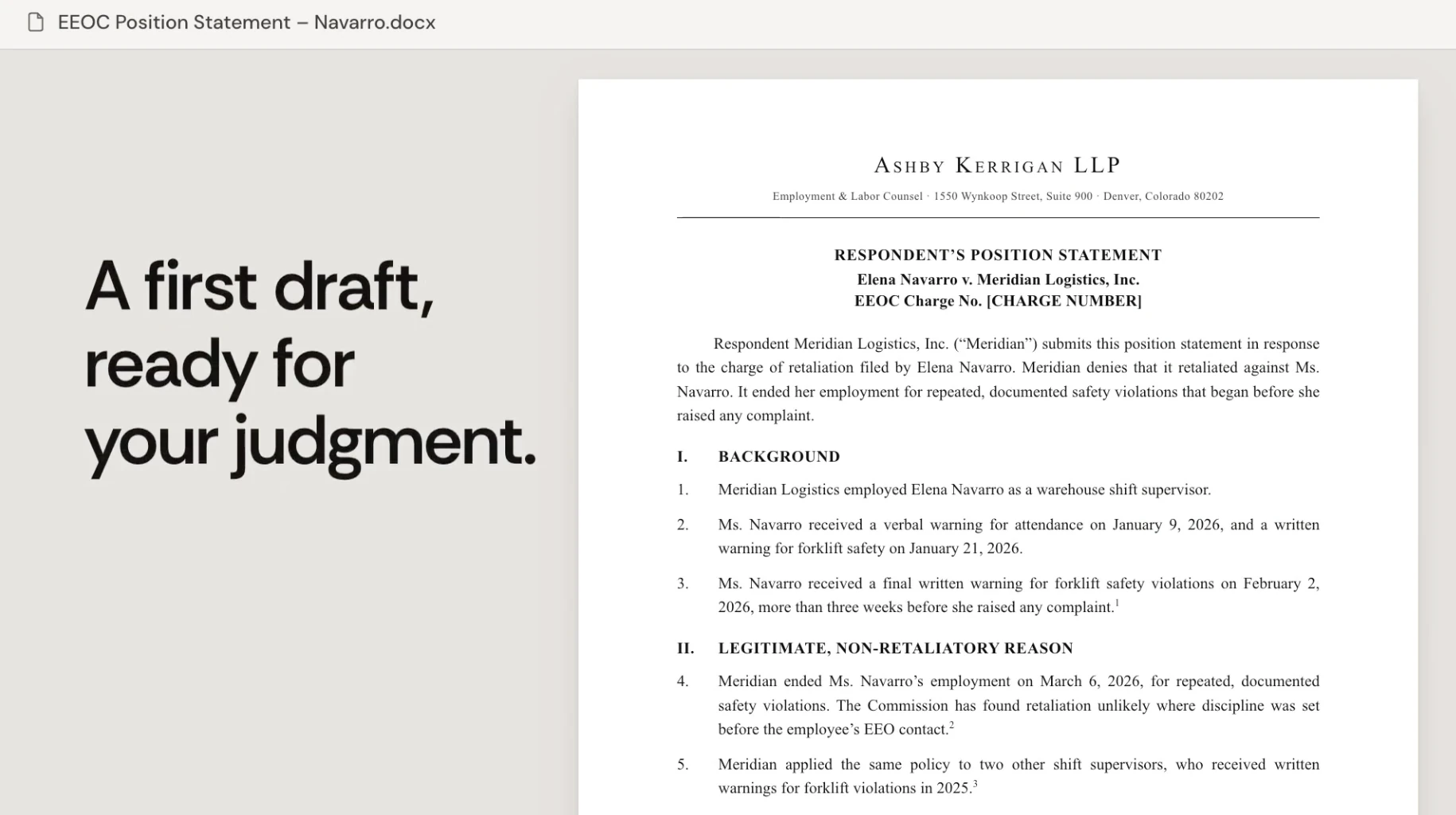
Then click any statement and go straight to its source: the performance review that documents the warnings, the email that sets the timeline, the decision that sets the standard. Every line traces back to the evidence or authority behind it.
That is the difference. Paxton is not producing AI text you have to fact-check from scratch. It drafts from the record and the research, and shows its work, so the attorney who signs can stand behind every sentence.
And the matter keeps going
If the charge becomes a complaint, nothing starts over. The same matter, with the same record and the same research, carries into the answer, discovery responses, deposition prep, and summary judgment. When it is time to file, Paxton applies the court's local rules and the judge's standing orders, so drafts come out ready for that court. Every stage builds on the work you have already done.
What it means for your team
For the associate, it means starting from a sourced draft instead of a blank page and a stack of documents. For the partner, it means a position statement where every fact and every authority can be checked in a click. For the firm, it means employment matters handled to the same standard every time, whoever is staffed on them.
Paxton is the AI built to give litigators an edge to win. It is built by the team behind CoCounsel at Casetext and focused entirely on litigation. See it on an employment matter of your own: start a 7-day free trial at paxton.ai, or book a demo.
.png)

.jpg)



.png)