One Source of Truth for Every Litigation Matter
.png)
Every litigator has lived some version of this moment: a partner asks an associate to pick up a matter, and the associate spends the first several hours not on the case — but on tracking down what's already been done. Where's the latest research? Did someone already draft this motion? Whose upload is the current one? By the time they've reconstructed the context, half the day is gone.
That's not a version-control problem. It's a context problem - and it's the bigger issue most collaboration tools miss.
On any multi-attorney matter, work tends to live in a dozen different places at once: email threads, shared drives, someone's local drafts folder, a paralegal's notes, a partner's marked-up PDF. The deeper issue isn't just that these are scattered copies — it's that most people on the matter simply don't have access to the full picture. One attorney holds the account. Everyone else works from whatever gets forwarded to them, which is never the whole matter - just fragments of it.
That creates three compounding problems:
- Duplicate effort. People research the same issue, or upload the same case file, because neither had visibility into what the other already had access to.
- Access bottlenecks. Progress stalls because one person is the only one who can actually get into the matter - the files, the outputs, the current state of the case.
- Slow handoffs. When a new associate joins a matter, or a partner needs to step in on short notice, they're not just missing a file - they're missing the entire context: what's been drafted, what's been found, what's already been decided.
Individually, each of these looks like a minor inefficiency. Across a caseload, they add up to real hours lost - and real risk, because a document going out without the person filing it having full context of the matter isn't just inefficient, it's a liability and reputation problem.
Shared access, not shared logins
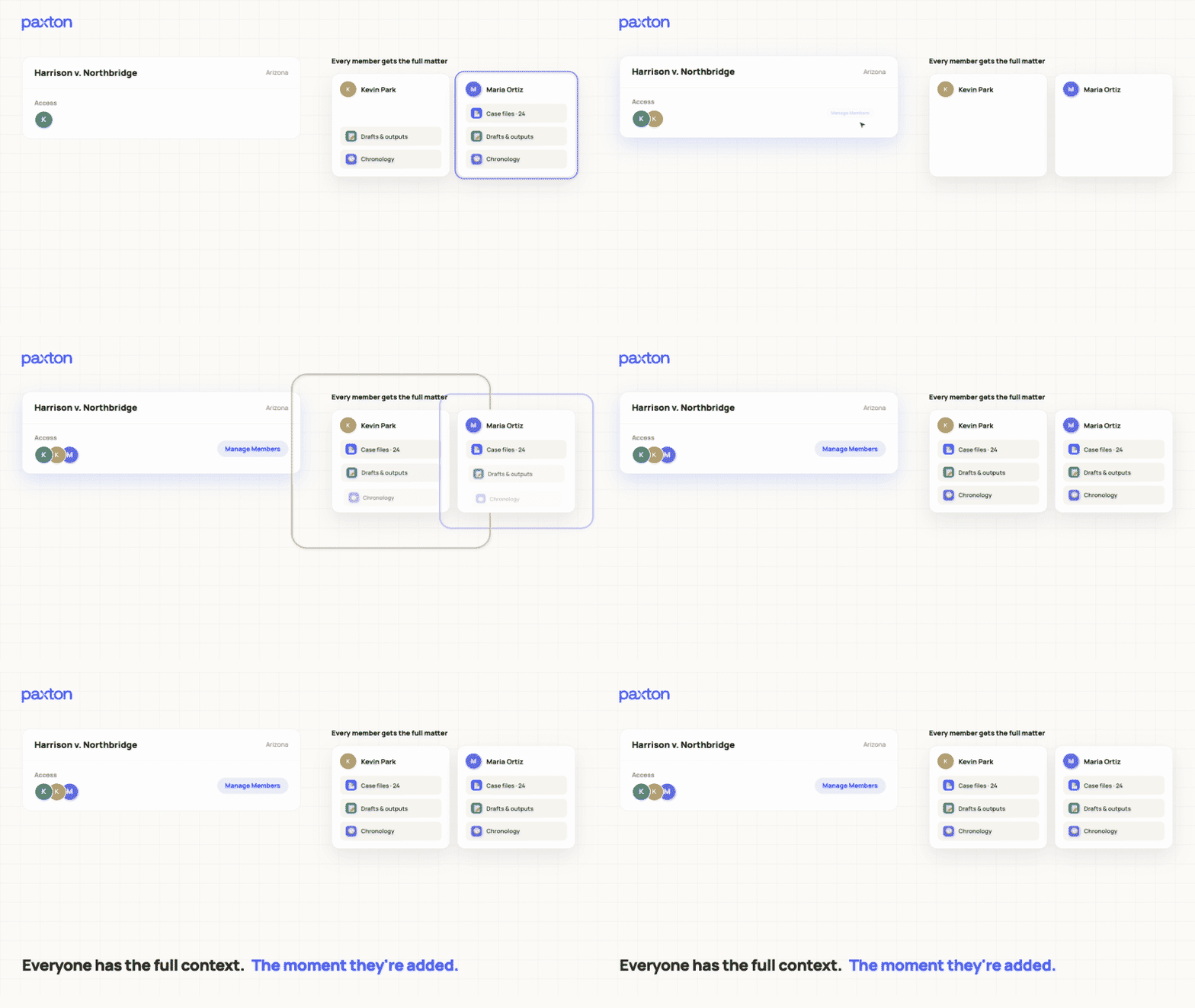
Paxton's Secure Matter Collaboration is built to close that gap. Share a matter with your team, and everyone gets access to the same case files and outputs immediately - no re-uploading, no forwarding attachments, no waiting on whoever happens to hold the account.
That distinction matters. A shared drive gives you the same files, eventually, once someone remembers to share them. A shared matter gives every authorized team member the full context of the case the moment they're added - the files, the drafts, the generated summaries and chronologies - without anyone acting as the bottleneck.
What that looks like in practice:
Shared matter access, not shared logins. Every teammate signs in under their own account, while access to the matter itself is managed centrally. No one is locked out because someone else holds the login.
One workspace instead of endless email chains. Uploading files, generating chronologies and summaries, and drafting motions and discovery all happen in one place - visible to the whole team immediately, not scattered across inboxes and attachments.
Faster approvals. When the whole team has access to the current state of a matter, sign-off happens faster - there's less time spent tracking someone down just to find out what's ready to review.
Risk protection built in. A document going out without full context behind it is one of the most avoidable - and most damaging - mistakes a litigation team can make. Giving the whole team real access to the matter removes the guesswork that causes it.
Smoother handoffs. When a new team member is added to a matter, they're not hunting for files or waiting on someone to forward them. They have the full context immediately.
Why this matters more as teams grow
The bigger a matter gets - more attorneys, more discovery, more moving pieces - the more this access gap costs you. A solo practitioner holds the whole case in their head by default. A team of five or six working the same matter can't do that unless every one of them can actually get into the matter itself, not just the pieces someone happens to send them.
That's the real value of shared matter access: it's not just about convenience. It's about making sure every attorney working a case actually has the context to work it well - instead of reconstructing it from whatever lands in their inbox.
Seeing it on a real matter
The best way to evaluate a tool like this isn't a generic walkthrough - it's seeing how it handles a matter you're actually working on right now. If your team is juggling a multi-attorney case and want to see how Secure Matter Collaboration would fit into your actual workflow, we're happy to walk through it together.


.jpg)



.png)