Introducing Secondary Sources: Law Review Commentary in Your Legal Research

Litigators working a hard question often need more than the holding. They need to know how a doctrine developed, where courts disagree and how other lawyers are reading an open issue. That analysis lives in law review articles, and until now it sat outside Paxton, in journals you had to search on your own.
Today Paxton's legal research searches law review articles alongside case law and statutes. Ask for the scholarly angle, and Paxton finds the commentary, explains what it argues and links you to the original article so you can read it in full and cite it.
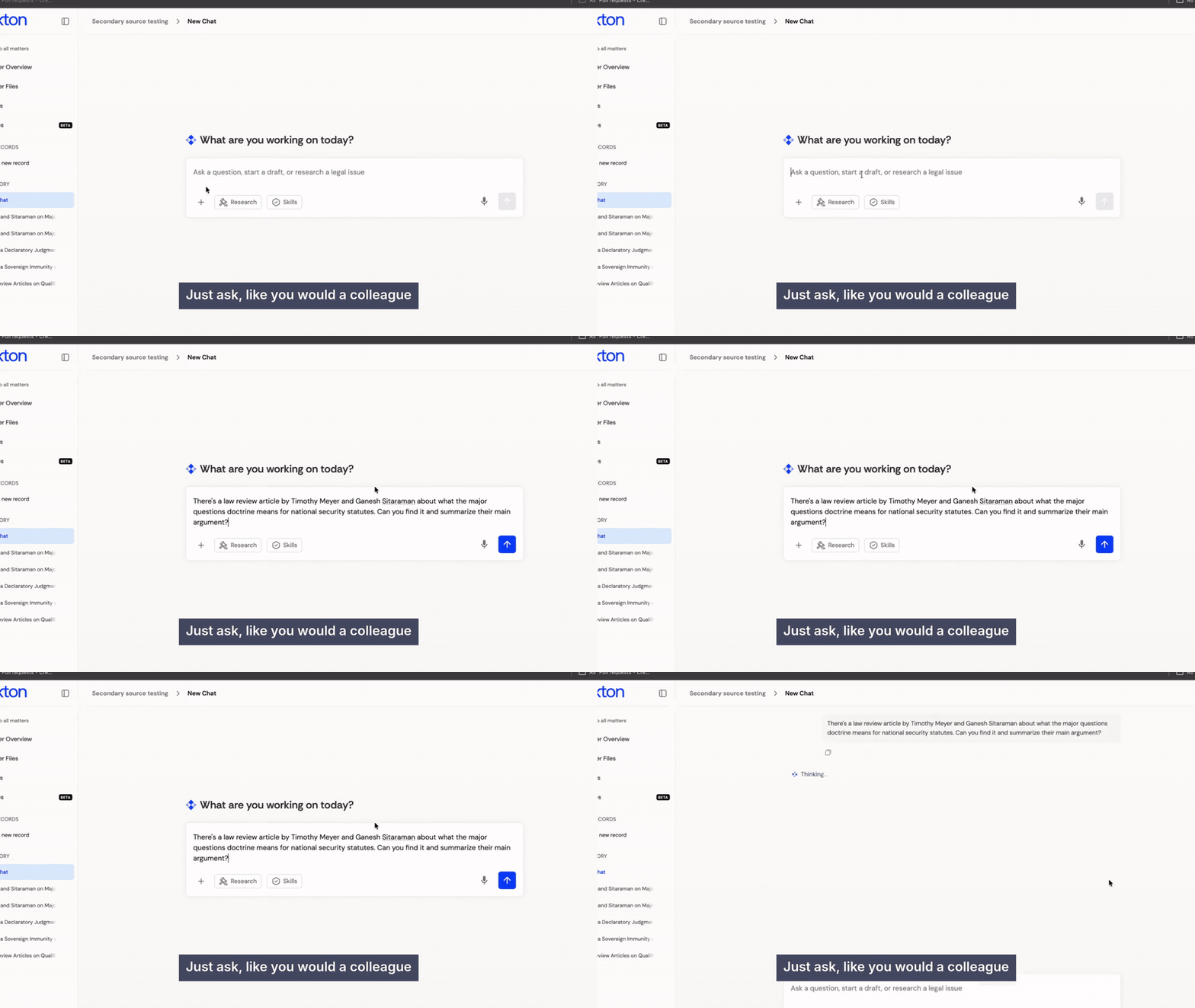
Just ask, like you would a colleague
You don't need to know which journal to check or run a separate search. Ask in plain language: name an article, ask what commentators say about an unsettled question, or ask for the law review perspective on an issue. Paxton searches the collection for you as part of the same research pass.
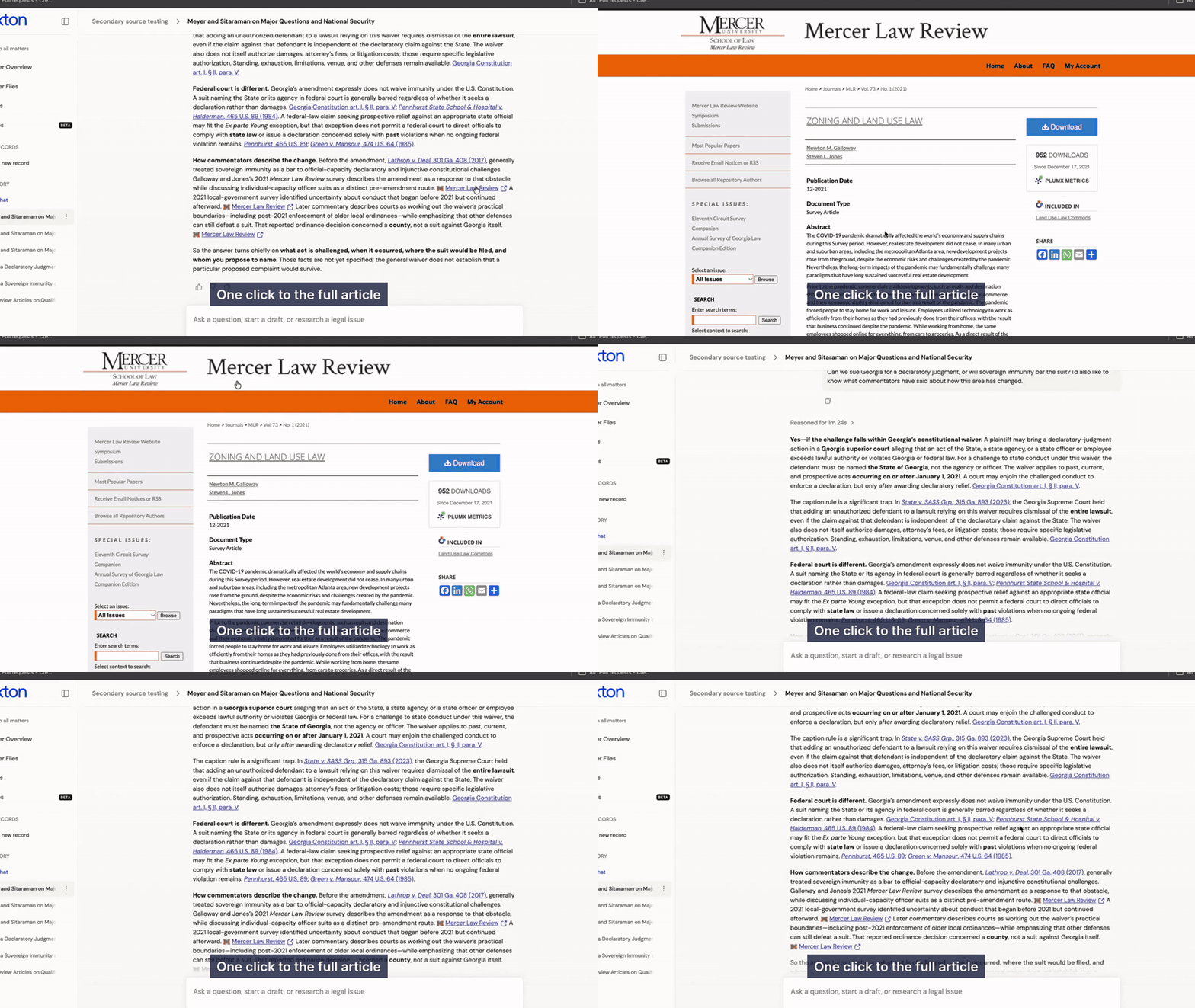
Every argument is cited and linked to its source
Paxton answers with a plain-language summary of each article's analysis, written as scholarly commentary rather than a case holding, so you can tell at a glance what is authority and what is analysis. Each point carries a citation to the article it came from.
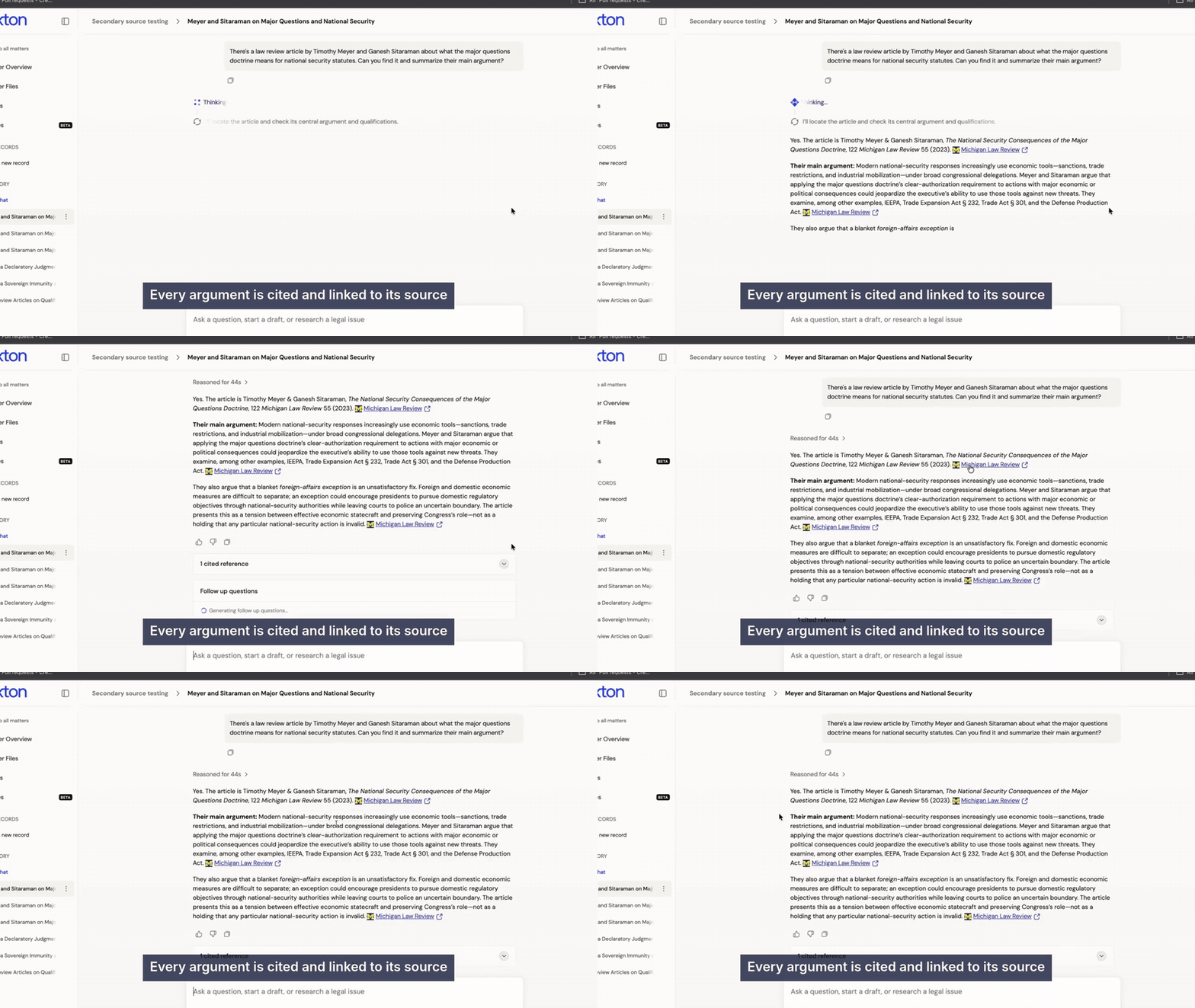
Case law and commentary, in one answer
Secondary Sources works alongside Paxton's primary law research, not instead of it. Ask whether Georgia's sovereign immunity amendment lets you sue the State for declaratory relief, and Paxton answers from the constitution and the cases, then shows how commentators in the Mercer Law Review describe the change and the open questions it left behind.
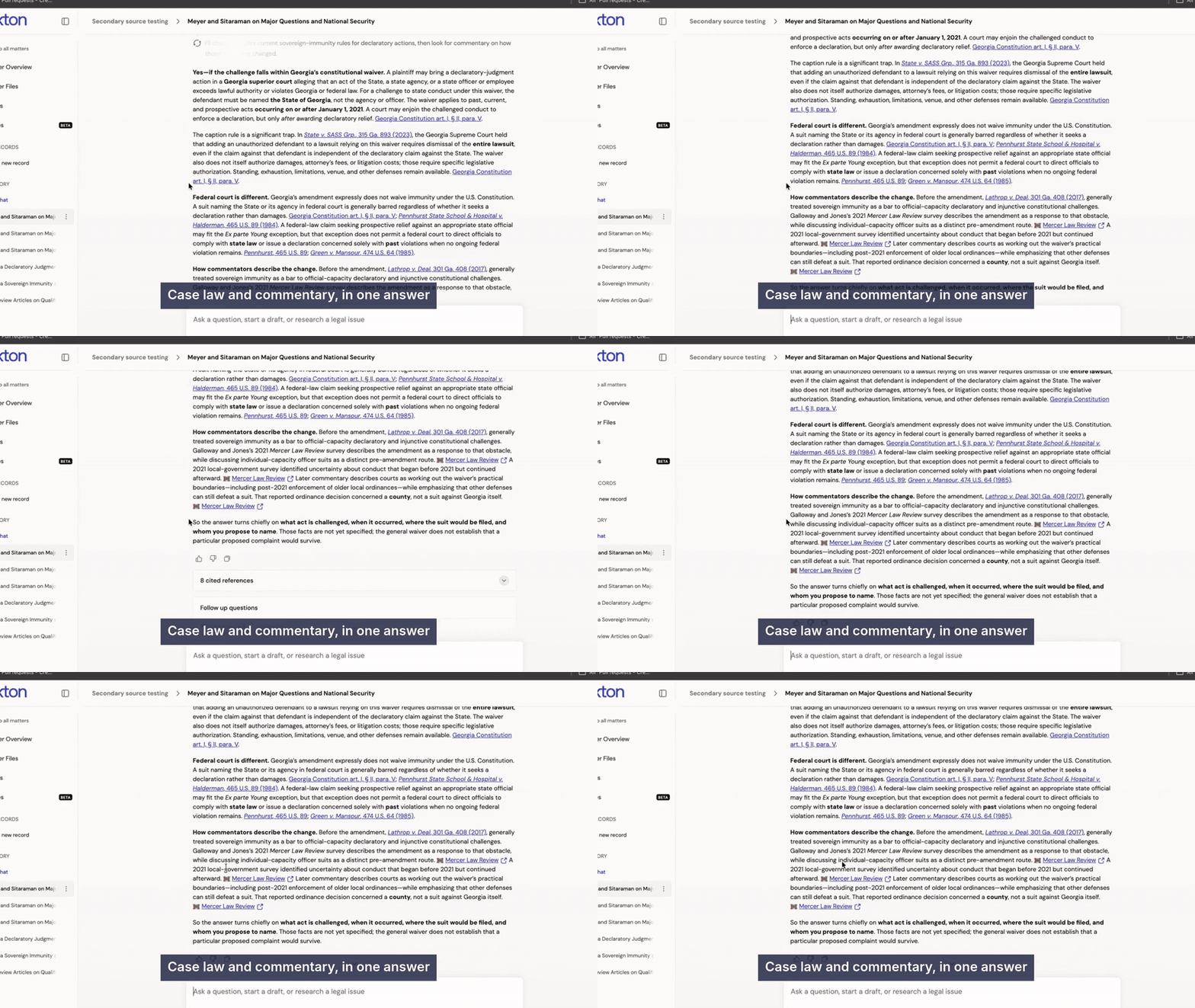
One click to the full article
Paxton never shows full article text or quotes from the collection. It summarizes in its own words and links to the publisher's page, out of respect for the journals' rights. Click the citation to open the article, read it in full and pull the pin cite.
What's covered
Secondary Sources covers more than 400,000 articles from roughly 490 U.S. law journals, published from 1897 to today, and the collection grows every week.
- Up to five articles per search. If you don't see what you need, name the article, author or journal more specifically.
- Citation details included. Each article comes with its title, authors, journal, volume and year. Pull page numbers for a pin cite from the publisher's site.
- On by default, easy to turn off. Want primary authority only? Turn Secondary Sources off in the research selector for that conversation. Case law and statute results work the same either way.
- A complement, not a replacement. Secondary Sources adds law review commentary to Paxton's research. It doesn't replace a dedicated secondary-sources database, and paywalled journals, HeinOnline, Westlaw and Lexis content aren't included.
Get started
Secondary Sources is live in Paxton today. Open a conversation and ask what the scholarship says about the question you're working on. New to Paxton? We'll show you how it works with your own matters.